My child struggles at school
Reading, writing, maths or keeping up in class.
Learn more — My child struggles at school العربيةBook an assessment
Targeted help so your child can read, write and calculate with more confidence.
Some children work hard but still find reading, spelling, writing or maths much more difficult than their classmates. They may start to avoid homework, say they are "stupid", or become anxious about school. This is not about effort or intelligence. Often, it is about how the brain processes certain kinds of information.
We support both developmental learning difficulties — in the skills underneath learning, such as attention, memory, visual and auditory processing — and academic learning difficulties in reading, writing and maths, including dyslexia and dyscalculia. We find out exactly where learning breaks down, then teach in a structured, multi-sensory way that matches how your child learns best.
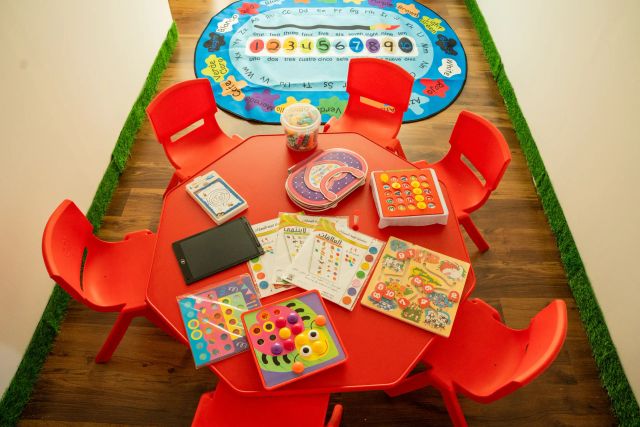
We assess reading, writing, spelling and maths, along with the skills underneath them, such as memory, attention and processing.
We explain your child's strengths and difficulties and what they mean for learning, in plain language.
Specific, measurable goals for the skills that will make the biggest difference.
One-to-one or small-group sessions that build skills step by step, using sight, sound, movement and touch.
Practical tools for memory, organisation, note-taking and checking work, so children become more independent learners.
With consent, we share strategies and classroom adjustments with teachers, and review progress every term.
We teach to your child's learning profile, not to a fixed programme. Sessions start where your child is, not where the curriculum says they should be.
Confidence matters as much as skills. We help children understand how they learn and feel proud of their progress.
We work with you and the school so strategies are used consistently and homework becomes manageable.
We use structured, systematic and multi-sensory teaching methods with strong research support for learning difficulties.
1 of 4
We will help you understand your child's learning profile and what to expect. You will receive simple ways to support reading, spelling or maths at home without turning every evening into a lesson. We also help you talk with your child about their difficulties in a positive way, and with the school about the support they need.
Tutoring usually reteaches school content. Learning difficulties support targets the underlying skills and uses specialist methods for how your child learns, so progress is more likely to last.
Our assessment identifies learning difficulties and describes your child's profile in detail. Where the findings support it, our licensed specialists can provide a formal diagnosis of dyslexia or another specific learning difficulty, and explain clearly what it means.
It is important information. We consider your child's languages in the assessment and plan, so we can separate language learning from a learning difficulty. Learning support is available in Arabic and English, and in other languages such as Russian on request.
Most children attend one to three sessions a week. We will recommend what suits your child after the assessment.
Every child is different. With the right support, most children make clear progress in skills and confidence. We set realistic goals and track progress with you.
Reading, writing, maths or keeping up in class.
Learn more — My child struggles at schoolIndividual learning plans and one-to-one or small-group teaching.
Learn more — Special EducationA clear picture of how your child is developing, with practical next steps.
Learn more — Comprehensive Assessment & Standardized Testing1 of 3
Book a learning assessment, or try our learning screening guide first.
 Chat with us on WhatsApp