My child isn't talking yet
Few words, no sentences, or speech that is hard to understand.
Learn more — My child isn't talking yet العربيةBook an assessment
Helping your child understand, speak and connect with confidence.
Communication is how children share what they need, what they feel and who they are. When words come late, or speech is hard to understand, children can feel frustrated — and parents can feel worried and unsure how to help.
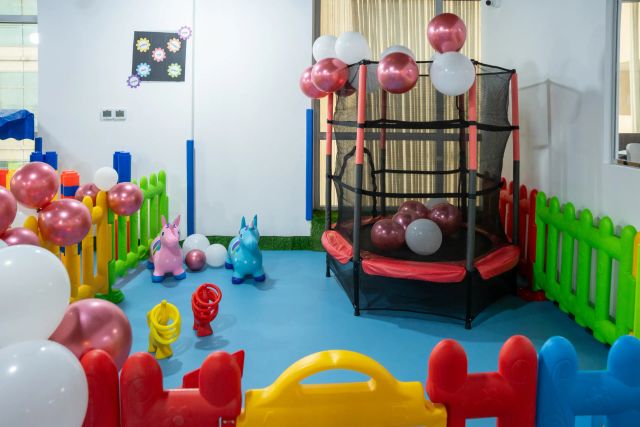
Our speech and language therapy supports children with speech delay, unclear speech, stuttering, and difficulties understanding or using language. Sessions are play-based and built around your child's interests, so learning feels like fun. We also coach you, because the biggest progress often happens in everyday moments at home.
We assess how your child understands, speaks, uses sounds, plays and interacts, using standardised measures and play.
We set clear, achievable goals with you, starting with what will make the biggest difference to daily life.
One-to-one sessions with toys, games, books and songs that keep your child motivated.
Targeted work on speech sounds, smooth speech for children who stutter, and healthy voice use.
Building vocabulary, sentences, following instructions, storytelling and conversation skills.
We show you simple strategies to use at home, in the car and at mealtimes.
Your child's interests become the therapy. A child who loves cars learns words through cars.
Communication affects friendships, behavior and learning. We work with OT, behavior and education colleagues when needed.
You are your child's most important communication partner. We share goals with you and, with consent, with your child's school.
We use recognised speech and language therapy approaches and measure progress against clear goals.
1 of 4
You are welcome in sessions. We explain what we are doing and why, then show you how to use the same strategies at home — simple things like waiting, giving choices and naming what your child is looking at. Each child receives practice ideas that fit into your normal day, so therapy continues long after the session ends.
Some children catch up on their own, but many do not. Early support makes a real difference, and an assessment will tell you whether therapy is needed. If you are worried, it is better to ask early.
No. Research shows that bilingualism does not cause speech or language delay. Keep using the languages you speak naturally. We will advise you on how to support both.
It depends on your child and their goals. We review progress regularly and will discuss timelines with you after the assessment.
High screen time can reduce the talk and play children need. We can suggest practical ways to balance screens with interaction.
Yes, if it has not been checked recently. A hearing test is an important part of understanding speech delay, and we can advise you where to go.
Few words, no sentences, or speech that is hard to understand.
Learn more — My child isn't talking yetSupport for children with developmental delays and autism spectrum needs.
Learn more — Developmental & Communication DisordersBuilding fine motor, sensory and everyday skills, including Sensory Integration.
Learn more — Occupational Therapy1 of 3
Book a speech and language assessment, or try our free screening guide first.
 Chat with us on WhatsApp