Sensory and motor difficulties
Clumsy, upset by noise or textures, or hard to hold a pencil.
Learn more — Sensory and motor difficulties العربيةBook an assessment
Building the everyday skills your child needs to play, learn and do things for themselves.
For children, "occupation" means the everyday jobs of childhood: playing, dressing, eating, writing, getting along with others and joining in at school. When a child struggles with movement, coordination or how they process their senses, these simple tasks can become hard and tiring — and confidence can suffer.
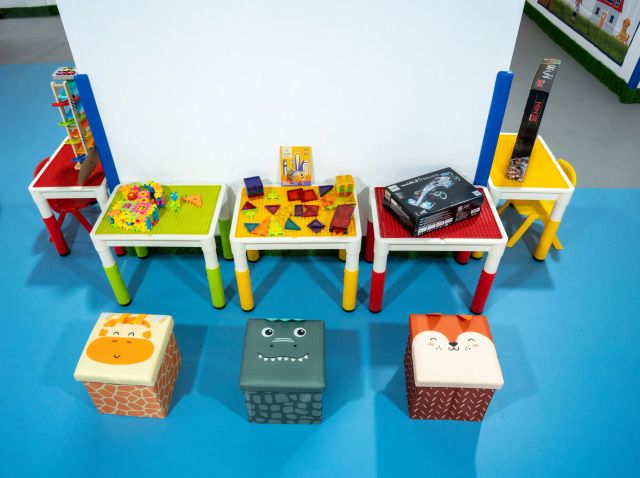
Our occupational therapists help children build strength, coordination, fine motor control and sensory regulation through purposeful play. We use Sensory Integration therapy to help children who are over- or under-sensitive to touch, sound, movement or other sensations, so they feel calmer and more ready to learn.
We assess motor skills, coordination, sensory processing, self-care and play, using standardised measures, observation and your input.
We agree goals linked to daily life, such as dressing independently, writing their name or coping with the school canteen.
One-to-one, play-based sessions in our therapy room, using swings, climbing, fine-motor activities and games.
Structured sensory activities that help your child's brain organise touch, movement and balance information, so they can stay calm and focused.
A simple sensory diet, handwriting tips or classroom adjustments to support your child every day.
We review goals regularly with you and update the plan.
We start with what your child finds hard in daily life and what motivates them, and build therapy around both.
Motor and sensory skills affect behavior, attention and confidence. We look at the whole picture and work closely with speech and behavior colleagues.
You and your child's teachers learn simple activities and adjustments to use between sessions.
We use recognised OT approaches, including Sensory Integration, and track progress against clear goals.
1 of 4
You know which moments of the day are hardest — getting dressed, mealtimes, homework or bedtime. We start there. You can watch parts of sessions to see what works, and we give you short, fun activities to do at home. Understanding your child's sensory needs can change how you see "difficult" behavior — and how you respond to it.
It is a play-based therapy that uses swinging, climbing, deep pressure and touch activities to help a child's brain process sensory information better. The aim is for your child to feel more comfortable and regulated in daily life.
Not always. But if clumsiness affects play, self-care, writing or confidence, an OT assessment can show whether therapy will help or whether simple home activities are enough.
Most children attend once or twice a week. Session length and frequency depend on your child's needs, and we agree them with you after the assessment.
OT can help by building hand strength, pencil grip, posture and visual-motor skills. Progress depends on your child, but many children write more comfortably with the right support and practice.
Yes. Many children benefit from both, and our therapists plan together so the goals support each other.
Clumsy, upset by noise or textures, or hard to hold a pencil.
Learn more — Sensory and motor difficultiesSupport for children with developmental delays and autism spectrum needs.
Learn more — Developmental & Communication DisordersGetting ready for nursery, school or a mainstream classroom.
Learn more — School Integration Preparation1 of 3
Book an OT assessment, or message us with your questions.
 Chat with us on WhatsApp